Solar Thermal Systems: Types, Applications, and Large-Scale Power Generation
December 20, 2025
Solar energy is a clean source of energy that is instrumental in the minimization of carbon emission and the general economic system. With the world turning off fossil fuel and toward renewables, solar thermal systems are now significant in constructing the sustainable future (Cellura et al., 2025). Solar thermal is nowadays known to offer affordable, sustainable heating in a variety of industries (Kadam et al., 2025).Unlike PV panels that make electricity from sunlight, solar thermal systems capture the sun’s energy as heat for practical use. Solar thermal systems provide a cost-effective method for producing thermal energy from solar radiation. In solar thermal systems, collectors absorb sunlight and turn it into heat, warming a fluid, air, or even salt. This heat can be used for domestic heating or to drive power cycles (Wu et al., 2025). In this article, solar thermal systems are grouped into two main categories: 1- domestic scale 2- Large-scale (plants) systems. We will review their sub-categories, along with their advantages, challenges and limitations.
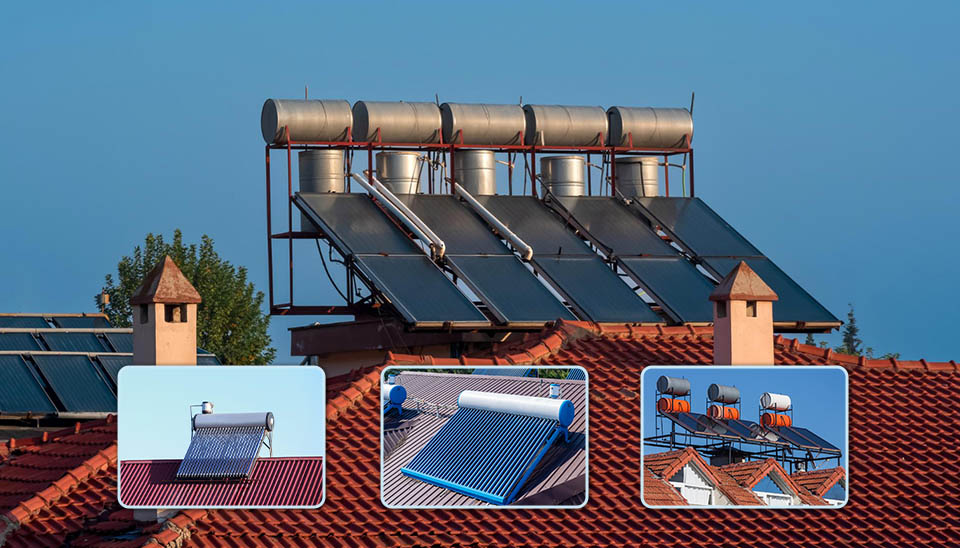
Fig. 1. Solar thermal collectors
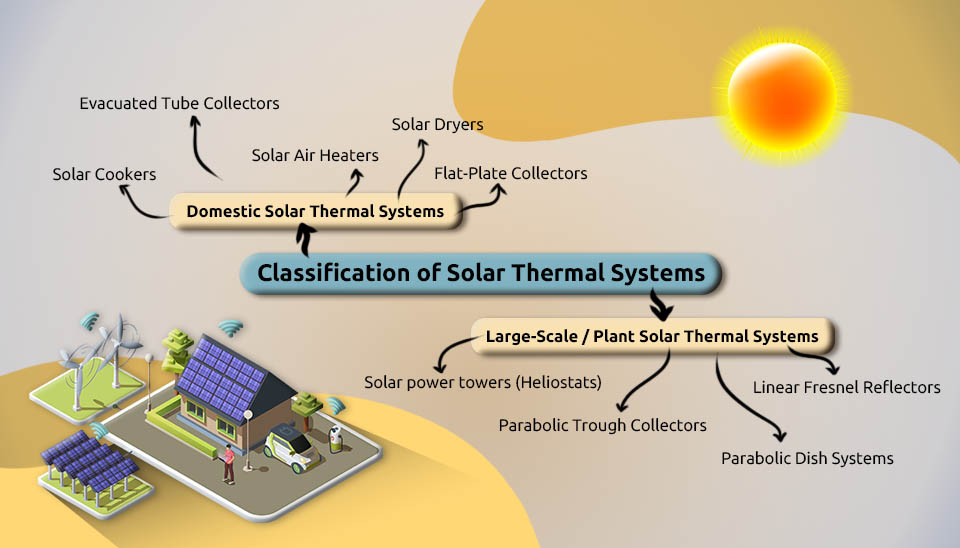
Table 1. Solar Thermal Systems Categories
| Category | System Type | Description |
| Domestic Systems | Flat-plate collectors | basic panels that contain absorber plates and channels for fluid circulation, commonly used to provide hot water and space heating in homes. |
| Evacuated tube collectors | Cylindrical glass tubes with vacuum insulation; more efficient in colder or cloudy climates, used for water and space heating. | |
| Solar air heaters | Designed to heat air directly with flat-plate or evacuated tube technology; mainly used for space heating and ventilation. | |
| Solar dryers | These systems rely on warm air from solar collectors to dry agricultural goods | |
| Solar cookers | By concentrating solar energy, these tools allow cooking without fuel, making them an affordable and sustainable choice for households. | |
| Large-Scale Systems | Parabolic trough collectors | These systems use long, curved mirrors to concentrate sunlight onto a receiver tube, commonly applied in solar power plants. |
| Parabolic dish systems | A dish-shaped reflector gathers and directs sunlight onto a single point, often paired with Stirling engines for electricity generation. | |
| Linear Fresnel reflectors | These systems use flat or slightly curved mirrors to direct sunlight onto a fixed receiver. | |
| Solar power towers (heliostats) | In these systems, thousands of sun-tracking mirrors concentrate sunlight onto a central receiver, producing high temperatures needed for power generation. |
1. Classification of Solar Thermal Systems
Solar thermal systems can be characterized based on their size, the operating temperature, and uses. In this paper, the classification is based on system scale. Smaller systems, also referred to as domestic-scale systems, are installations that are usually used in single-building or home water and space heating. The systems generally employ low- to medium-temperature (less than 100 degrees Celsius) simple collectors (flat plates or evacuated tubes), which can be utilized in domestic hot water and heating (Singh et al., 2022).In contrast, large-scale solar thermal systems represent large-scale collector fields, which serve to supply industrial activities or to generate power. Concentrating technologies they typically deploy are able to follow the sun and generate significantly larger temperatures to produce power or provide heat to industries (Dincer et al., 2013).
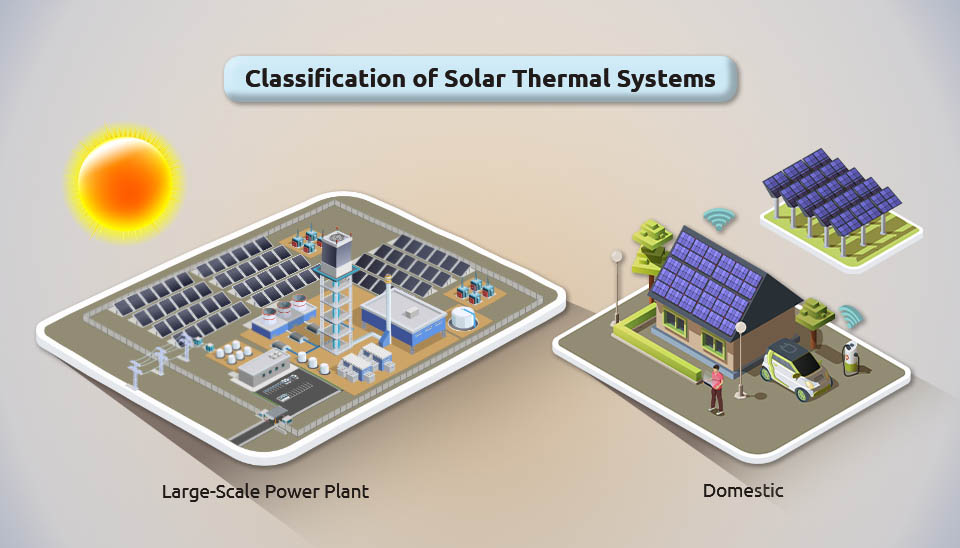
Fig. 2. Different types of Solar Thermal Systems
1.1. Domestic Solar Thermal Systems
Solar thermal is used mostly in residential buildings and small commercial facilities to warm up water or air by domestic solar thermal systems. They are also usually quite basic in design and focus on reliability and compatibility with the existing heating systems. Even though they work at lower temperatures, usually below 100°C, these systems can still provide domestic hot water and space heating using clean, renewable energy (Kalogirou et al., 2004).Domestic solar thermal installations often include an insulated storage tank for water or a thermal mass for air to store heat and keep it available for later. As a result, hot water or warm air can still be supplied hours or even days after collection (Sadowska et al., 2025). Below, we outline the main types of domestic solar thermal systems, how they work, and their applications.
1.1.1. Flat-plate collectors
Flat-plate collectors (FPCs) are the most common type of solar thermal system for domestic hot water. Flat-plate solar collectors are generally stationary, so they need to be installed with the right orientation. A standard flat-plate solar collector has glazing, an absorber plate, insulation, heat transfer tubes, and additional auxiliary components (Tian et al., 2013). The absorber plate, commonly made of coated metal, is placed under the glazing cover and above the insulation layer. Sunlight goes through the glass cover and warms the dark absorber plate. This heat is passed to a fluid, usually water or an antifreeze mix, that moves through the tubes. The glass acts like a greenhouse, keeping the heat inside and preventing it from escaping. They produce hot water at temperatures up to 60–80°C under normal operation conditions. In ideal sunlight, the absorber temperature can reach about 100°C. However, as the temperature rises, efficiency decreases due to the increased heat loss. (Greco et al. 2020).
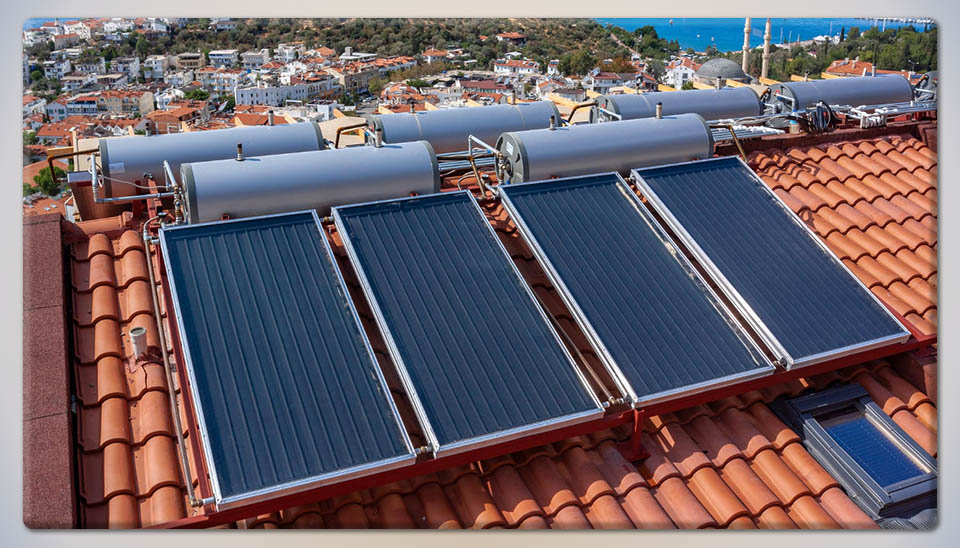
Fig. 3. Solar Flat-plate collectors
1.1.2. Evacuated Tube Collectors
The drawbacks of FPCs, such as their low working temperature and their sensitivity to weather conditions, led scientists to invent an advanced solar collector called evacuated tube collectors (ETCs). ETCs maintain performance under different weather conditions and operate over a higher temperature range of 50–200°C. Despite this, they maintain the same concentration ratio of 1. In an ETC, heat pipes placed inside vacuum tubes connect to a manifold that delivers hot fluid. These collectors work with both direct and diffuse solar radiation and perform better than FPCs at low sun angles (Dincer et al., 2013). The vacuum between the concentric glass walls drastically reduces convective and conductive heat losses from the absorber. Each evacuated tube has another glass tube inside it, with a vacuum in between that works as insulation and prevents heat loss. The two main types are U-tube and heat pipe collectors (Greco et al., 2020).
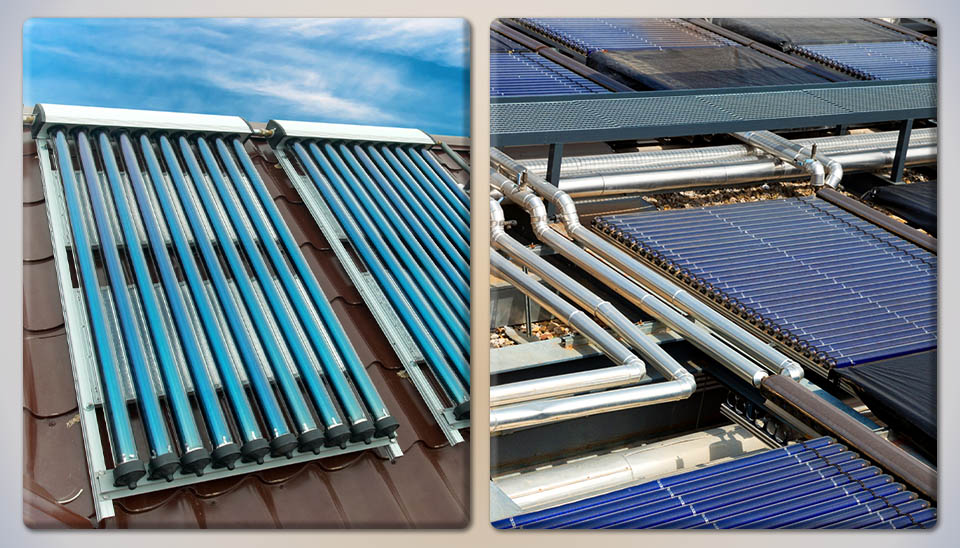
Fig. 4. Evacuated tube collector
1.1.3. Solar Air Heaters
Solar air heaters (SAHs) are systems that heat air by sunlight, which can be utilized to space heat or preheat ventilation air. The simplest form is one with a dark surface to absorb the heat of the sun. This surface is passed through by air, which absorbs heat and is then pumped into the house. There are various types of SAHs, though they are all similar in their basic components: a dark absorber plate (which can be made of thin aluminum), a transparent glass cover, air ducts, a fan or a blower, and insulation (Saxena et al., 2015). SAHs can be classified in several ways, including by flow pattern, application, hybrid design, absorber material, glass cover, flow type, and absorber surface type (Ghritlahre et al., 2022).
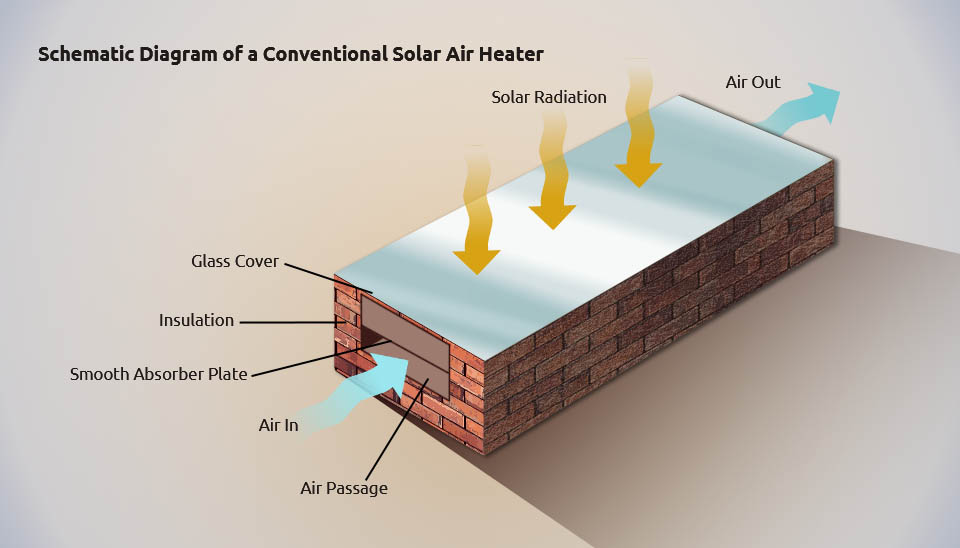
Fig. 5. Conventional solar air heater.
1.1.4. Solar Dryers
As the world looks for more sustainable and energy-efficient ways to preserve food, research on solar drying systems has accelerated (especially for remote areas with limited energy access). Solar energy is widely used for food drying in many developing countries, showing its value and importance. Over the past few decades, several applications have inspired the creation of small-scale solar dryers that include thermal energy storage. Solar dryers come in two main types: direct and indirect. Direct dryers expose food directly to sunlight for drying. Indirect dryers use an insulated box with a black absorber, air inlets and outlets, and glazed glass. Sunlight dries food and heats the air. Cool air enters from below and warm, humid air leaves through the higher wall as a result of the density differences between the inlet and outlet air (AD et al., 2025).
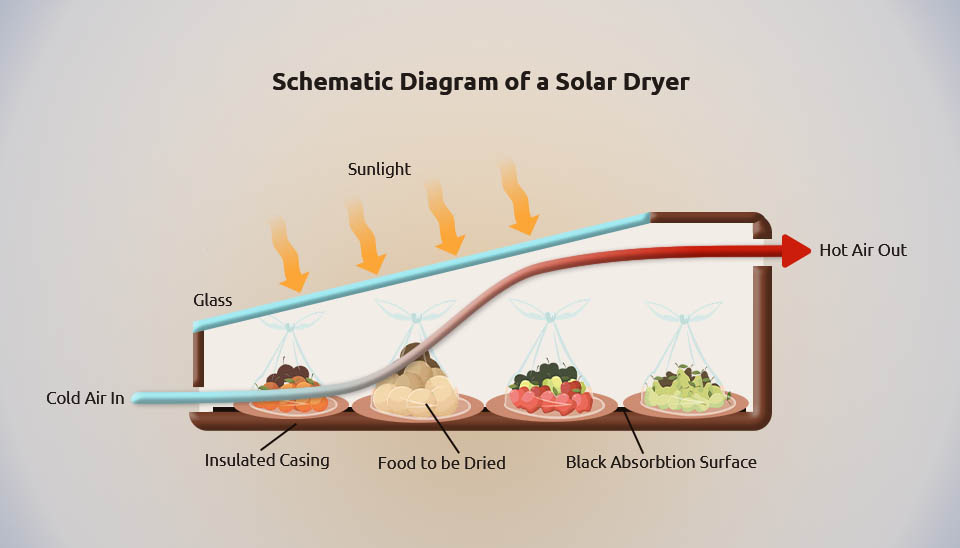
Fig. 6. Diagram of a solar dryer
1.1.5. Solar Cookers
Solar cooking technologies offer a sustainable way to fight global energy poverty and reduce the environmental harm caused by traditional cooking methods. Most of the 2.4 billion people who still don’t have access to clean cooking methods live in developing parts of Africa and Asia. There are two main types of solar cookers: direct and indirect. Each type has several subtypes that are different from each other. There are three main types of direct-type solar cookers: concentrating, panel, and box cookers. These cookers use sunlight directly to cook food. Indirect solar cookers, on the other hand, use a different system to use heat. They come in two main types: heat storage and solar collector (Odoi-Yorke et al., 2025).
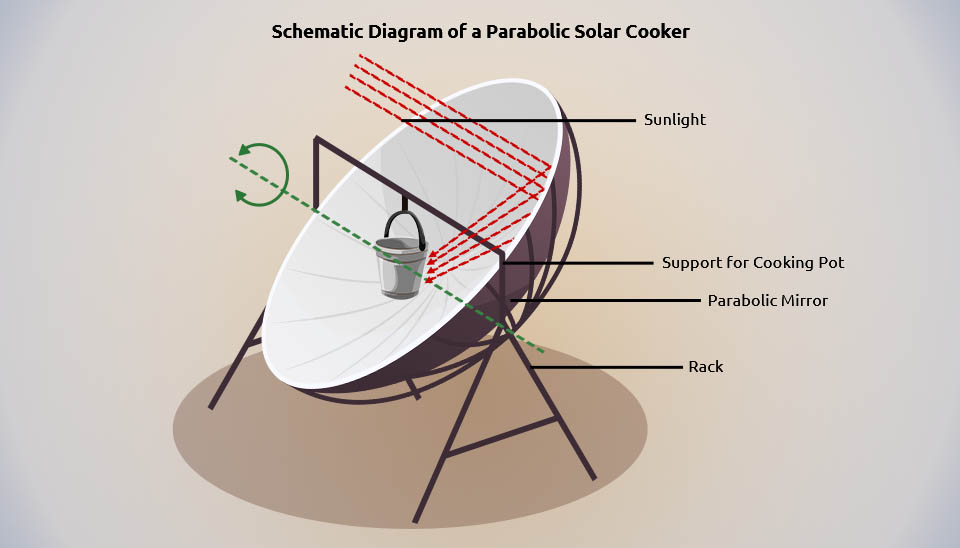
Fig. 7. Diagram of a parabolic solar cooker
1.2. Large-Scale/Plant Solar Thermal Systems
Large-scale solar thermal systems are built to provide high-temperature heat for power generation or industrial applications. These systems usually use concentrating solar collectors with mirrors or lenses that focus sunlight onto a small receiver, achieving much higher temperatures than standard flat-plate collectors. Such systems are known as Concentrating Solar Power (CSP) when used to generate electricity. The four primary CSP technologies are parabolic trough collectors, parabolic dish systems, linear Fresnel reflectors, and solar power towers (heliostats) (Wu et al., 2025).
1.2.1. Parabolic Trough Collectors
The most popular form of solar thermal system is the parabolic trough (PT), which is operated in approximately 80 percent of the current facilities. It focuses sunlight on a tube that follows the focal line with the use of curved mirrors. A heat-transfer fluid in the tube absorbs the concentrated solar energy. The mirror is able to focus sunlight at 100 times its original power due to its shape. The mirrors and the receiver track the sun to get as much energy as possible. The hot fluid generates steam, which can either drive a turbine to generate electricity or be stored in a tank for later use. PT systems can be operated at temperatures up to 550°C when more complicated fluids like molten salts or direct steam are employed (Gobio-Thomas et al., 2023).
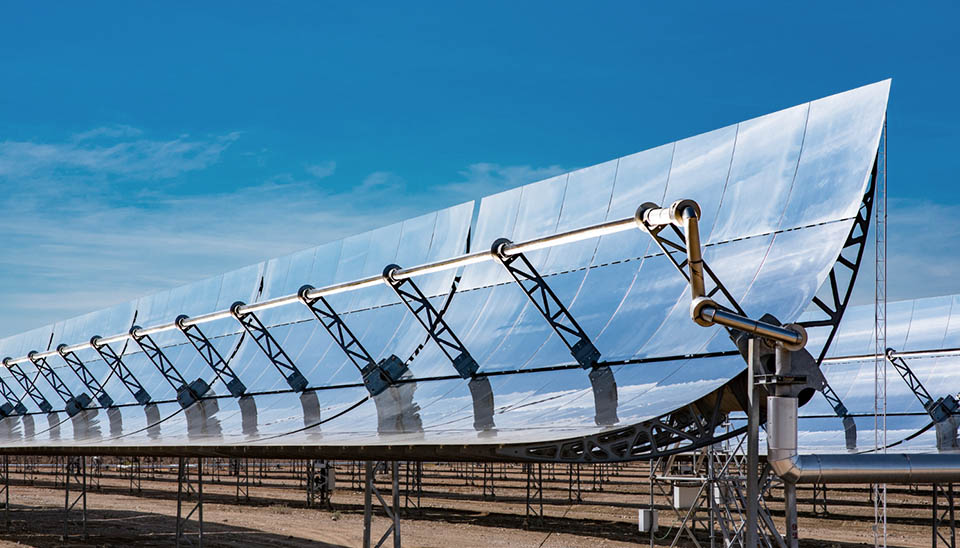
Fig. 8. Parabolic trough (PT) solar collector
1.2.2. Parabolic dish syste
A solar dish, also called a parabolic dish, uses curved mirrors to focus sunlight onto a receiver at the center. The dish and receiver move on a dual-axis system that tracks the sun for maximum efficiency. At the focus, the receiver works with a heat engine, usually a Stirling engine. Inside, a heat-transfer fluid collects the solar energy and sends it to a storage unit, where it can later be used for industrial heat or to generate electricity (Gu et al., 2025). Parabolic dishes have two major benefits. Because they follow the sun all day, they are the most efficient type of solar collector. They can also concentrate sunlight 600 to 2000 times, allowing them to capture heat and generate power very effectively (Kalogirou et al., 2004).
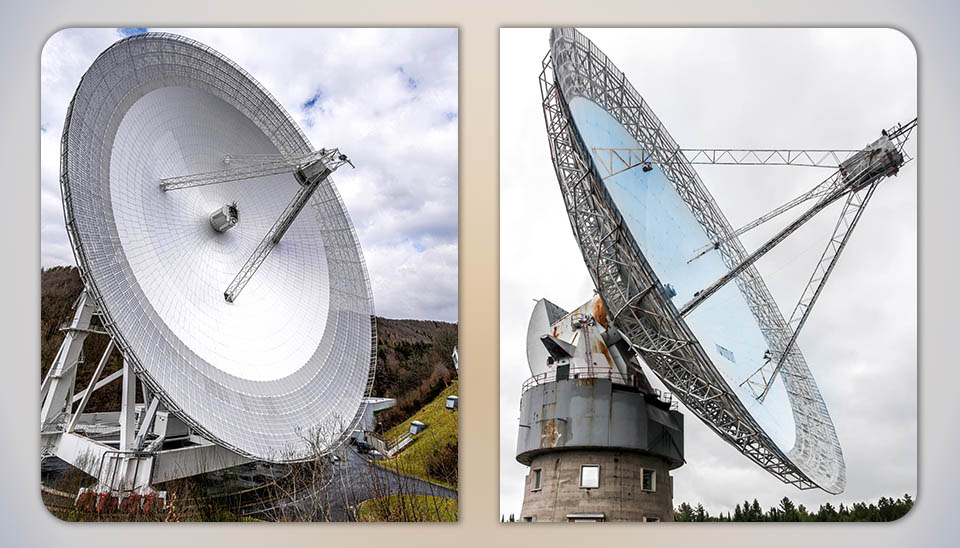
Fig. 9. Parabolic dish systems
1.2.3 Linear Fresnel Reflectors
A linear Fresnel reflector works much like a parabolic trough system but has a simpler setup. The receiver pipe stays fixed while the mirrors move to follow the sun and focus light onto it. Because of this simpler design, LFR systems cost less than parabolic troughs. The mirrors are made up of several flat or slightly curved panels placed close to the ground, each of which can tilt to reflect sunlight toward the receiver.Inside the receiver, a heat-transfer fluid absorbs the sun’s energy, which can then be used for heating or for producing electricity (Bellos, 2019). The main advantage of this system is its use of flat or slightly curved reflectors, which are less expensive than parabolic glass mirrors. In addition, the mirrors are mounted close to the ground, reducing the need for complex structural supports (Gharbi et al., 2011).
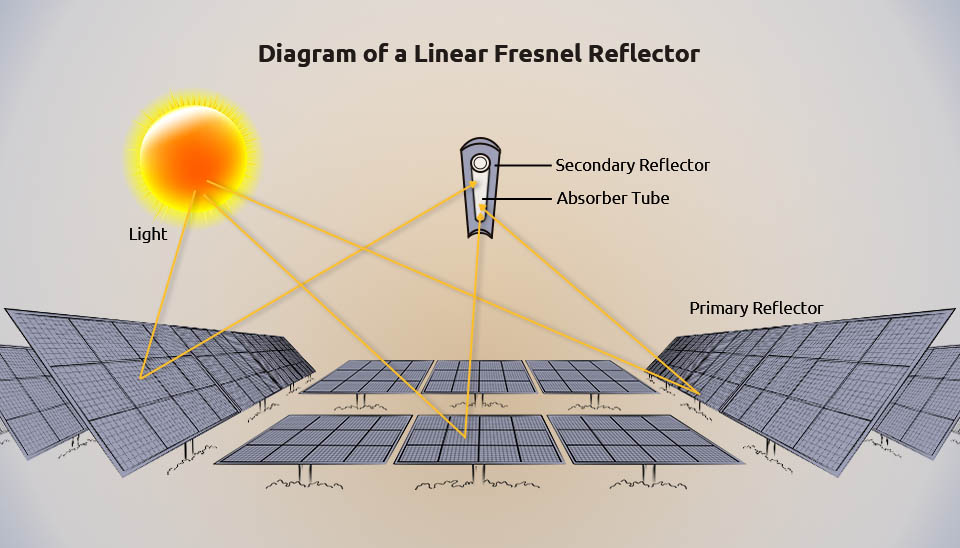
Fig. 10. Diagram of a linear Fresnel reflector
1.2.4. Solar Power Towers (Heliostats)
A solar tower plant also known as a central receiver system, consists of a tall tower supporting a receiver surrounded by an array of flat or slightly curved mirrors known as heliostats. The heliostats are fitted with a solar tracking system, which tracks the sun and focuses sunlight onto a receiver at the top of a tower. Each heliostat at a central-receiver facility has from 50 to 150 m² of reflective surface. The receiver contains a heat-transfer material, e.g., water and molten salt, that absorbs the energy of the sun and from this, one can either extract steam, produce heat, or produce electricity. The major benefits of central receiver systems are as follows: 1- They can capture sunlight over numerous mirrors and concentrate it on a single receiver, which decreases the amount of heat loss. 2- They can achieve high concentration ratios of 300 to 1500 and are therefore very effective in energy collection and conversion. 3- They can conveniently store thermal energy 4- Their large size, usually over 10 MW, helps lower overall costs through economies of scale (Forsberg et al., 2006).
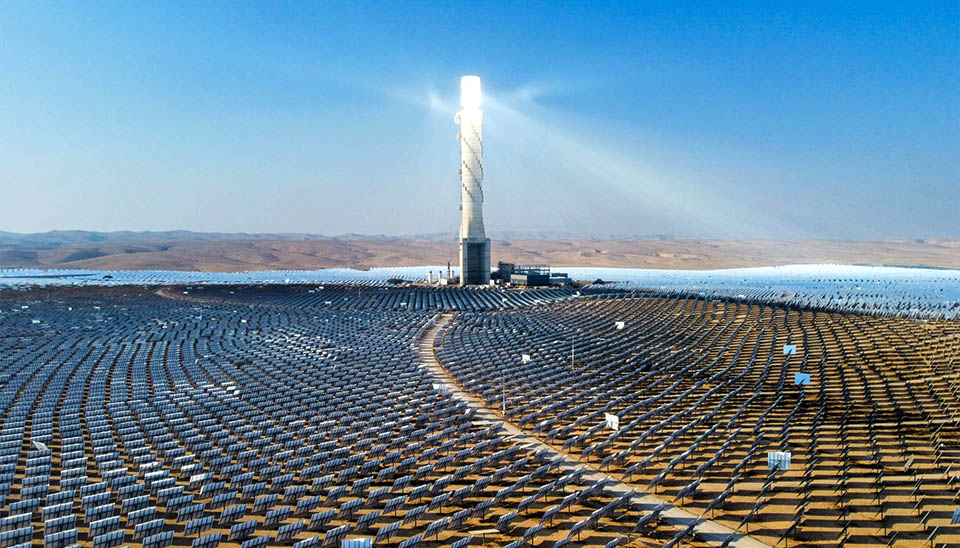
Fig. 11. Solar power tower
2. Advantages of Solar Thermal Systems
By using the sun’s free and plentiful energy, solar thermal systems help cut reliance on fossil fuels. They don’t need fuel transport, don’t release greenhouse gases while operating, and cause very little air pollution. For example, CSP facilities have stopped 12 million tons of carbon dioxide from being released into the air every year (Yao et al., 2023).Solar thermal systems heat water more efficiently in homes than using electricity from solar panels. Because they collect heat directly from the sun, they avoid the energy losses that happen when solar electricity is converted and then used for heating. Flat plate collectors have system efficiencies of 45 to 60 percent, while evacuated tube designs have even higher efficiencies (Al Mamun et al., 2023).Solar thermal technology can be scaled up or down depending on the need. It can power large plants that produce hundreds of megawatts of electricity or simply provide 150–300 liters of hot water each day for a household. This flexibility allows it to fit a wide range of uses and budgets. (Islam et al., 2018; Goyal et al., 2022).
3. Challenges and Limitations
While solar thermal systems have enormous potential, they also face challenges that affect how well they work and how widely they’re used. Location, weather conditions, material wear, and regular maintenance all play important roles. These systems still need sunlight to work, even with heat storage. On cloudy days, they work less well, and at night, they stop working completely if they don’t have any stored energy. To keep them running continuously, backup systems or larger collector areas are often needed (Seddegh et al., 2015).Both domestic and large-scale solar thermal systems need substantial upfront investments which makes it difficult for newcomers to enter the market. In developed markets, a typical home solar water heater installation costs about £6,000, which is more than double the price of a regular water heater (Eze et al., 2024).Between cleaning intervals, soiling can cause a 20–40% decrease in system performance by reducing optical transmission through collector glazing and decreasing mirror reflectivity. Cleaning requirements raise concerns about operational costs and water use and automated cleaning systems increase capital cost and mechanical complexity (Soomar et al., 2022).
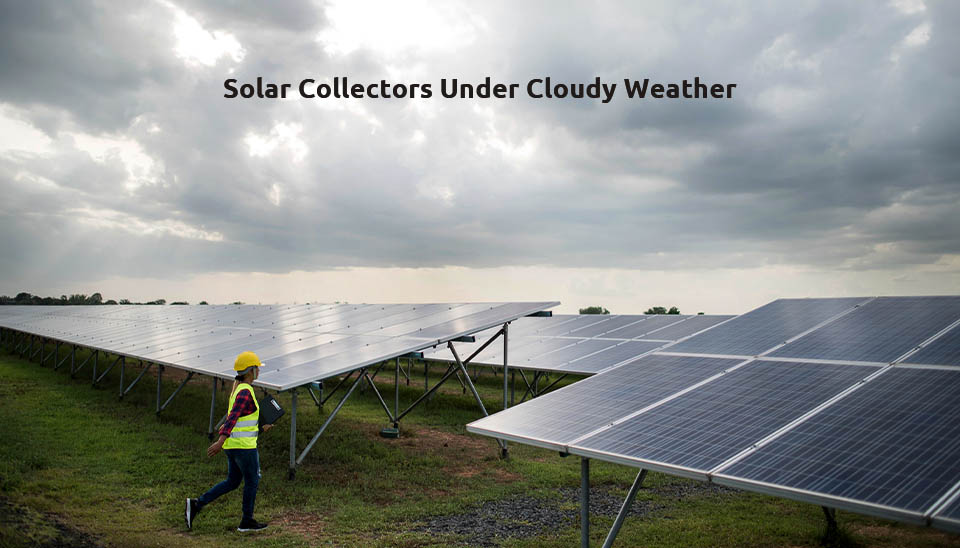
Fig. 12. Solar collectors under cloudy weather
4. Future Trends and Emerging Technologies
The solar thermal sector is growing rapidly through advances in materials and system design. Modern absorber coatings and nanomaterials allow operation at higher temperatures with less heat loss. Thermochemical storage methods, such as calcium looping and metal oxide cycles, offer greater energy capacity than molten salt systems. Particle-based storage also allows direct heating to nearly 1,200 °C (Fadzlin et al., 2025).Hybrid photovoltaic–thermal (PV/T) systems are becoming popular because they generate both electricity and heat from the same setup, making better use of roof space. In addition, supercritical carbon dioxide power cycles could greatly improve the efficiency of CSP plants—exceeding 50 percent—and reduce water use compared to traditional steam turbines (Islam et al., 2018).Artificial intelligence and smart controls are changing how solar thermal systems work. Machine learning can now adjust heliostat mirrors at large power plants, predict when maintenance is needed, and manage energy use in homes. In Europe, new smart heat storage systems (now close to being used commercially) combine solar power with thermal storage to balance energy use and increase on-site consumption (Alami et al., 2023).New receiver materials and heat-transfer fluids, such as liquid metals, have made solar thermal systems more efficient and capable of running at higher temperatures. Smaller CSP plants (between 100 kW and a few megawatts) are now being used successfully for industrial heat and district heating. In Europe, seasonal storage projects have shown that solar heat gathered in summer can be kept for winter use. Combining solar thermal energy with hydrogen production through high-temperature electrolysis or thermochemical methods also provides reliable long-term energy storage (Fadzlin et al., 2025).
For a broader understanding of renewable energy and other cutting-edge solar technologies, be sure to explore our comprehensive Article archive here.
5. Conclusion
Solar thermal technology covers a wide range of uses, from heating water in homes to generating electricity in large solar power plants. Compared to gas boilers, household systems can cut energy use and emissions by about 88%. However, high upfront costs and competition from other technologies limit their wider adoption. On an industrial scale, concentrated solar power (CSP) plants have become reliable and cost-effective, particularly when combined with a heat storage facility that allows them to generate power even after going down at sunset. This capability to provide power 24 hours a day provides CdTe an invaluable edge over conventional solar panels that can only produce energy during the day. In the future, the solar thermal energy has a number of challenges and also opportunities. High upfront costs, dependence on sunlight, and strong competition from ever-cheaper solar panels remain key obstacles for both small and large systems. Despite this, novel methods such as thermochemical and particle-based storage, supercritical CO₂ power cycles, and AI-powered optimization of the system are setting new trends of higher efficiency and reduced costs. It will need the collaboration of the researchers, governments, and industries to reach global targets such as installing solar thermal in 400 million households by 2030. Both small household systems and large industrial plants face similar issues with cost and energy storage that can be tackled through joint research and innovation.