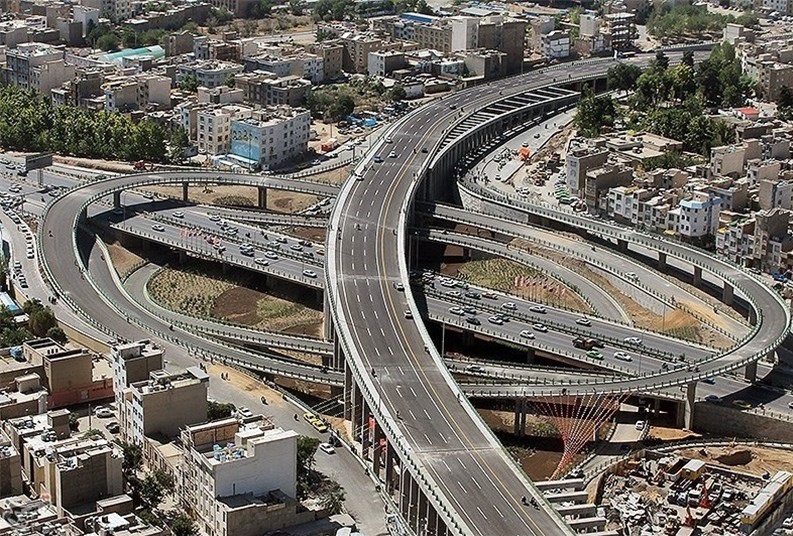
As a Medium-Voltage Network Relocation project, and in line with the development of urban infrastructure and the enhancement of safety and efficiency in energy networks, the project for the relocation of overhead and underground medium-voltage power networks interfering with the construction of the Shohada-ye Danesh-Amouz Bridge, along with the development of street lighting networks, was defined and implemented as one of the key urban infrastructure projects in the city of Karaj. The project aimed to eliminate major interferences between electricity distribution networks and the civil works related to the Danesh-Amouz underpass intersection, and was carried out within a highly technical, sensitive, and time-driven framework, playing an effective role in facilitating the implementation of urban development projects. Due to the simultaneous execution of heavy civil construction activities, the necessity to maintain power network stability, and the requirement to comply with safety and operational standards, the project took on a multi-dimensional and specialized nature. Pegah Energy Persian, as the project contractor, undertook the execution of this project by relying on its engineering capabilities, executive experience, and management structure, and through continuous coordination with the employer, Molavi Road and Construction Company of Karaj Municipality, successfully completed the project within the defined timeframe from September 6, 2023, to March 19, 2024, with a contract value of IRR 9,370,000,000. The implementation of the project in three separate phases within a high-traffic urban area significantly increased the importance of precise planning, risk management, and close interaction with urban stakeholders, clearly highlighting the critical role of the contractor in maintaining the continuity of urban services.

1. Strategic Objectives and Necessity of Project Implementation
The primary objective of this project was to eliminate existing electrical interferences along the route of the Danesh-Amouz underpass construction and to establish a safe and sustainable platform for the implementation of the Shohada-ye Danesh-Amouz Bridge civil project. The presence of overhead and underground medium- and low-voltage power networks within the project area constituted one of the major obstacles to the development of urban transportation infrastructure, making the proper and engineered relocation of these networks unavoidable. From a strategic perspective, the project was defined in response to the growing need of the city of Karaj for roadway development, reduction of traffic bottlenecks, and enhancement of urban traffic safety, directly contributing to the improvement of citizens’ quality of life. Increasing energy consumption in urban areas, the expansion of surrounding land uses, and the sensitivity of power network performance in high-traffic zones necessitated the design and implementation of a new network with adequate capacity, high reliability, and compliance with up-to-date technical requirements. Furthermore, the construction of street lighting networks along the underpass route and surrounding roads, as a complementary objective of the project, was considered essential for improving traffic safety, enhancing urban security, and upgrading the nighttime visual landscape of the area. Pegah Energy Persian, with a clear understanding of these strategic objectives and regional requirements, approached the project not merely as a network relocation operation, but as an integral part of a sustainable urban development chain, adopting a comprehensive approach aligned with broader urban development plans.
![Obstacles caused by overhead medium-voltage power networks in urban infrastructure projects [cite: 9]](https://pegahgroup.com/en/wp-content/uploads/2026/02/messy-electrical-obstruction-removal.jpg-scaled.jpg)
2. Scope of Services and Executive Activities of the Project
The scope of services encompassed a complete set of engineering, executive, and operational activities, covering all stages from initial design to installation, testing, and final commissioning of the networks. Engineering design for underground medium-voltage networks and the redesign of overhead routes in accordance with new civil conditions were carried out, followed by the procurement of required equipment, including cables, connection accessories, metallic lighting poles, and network components. The project was planned and executed in three phases to ensure the stability of the power network and prevent any disruption to electricity supply for consumers. In total, four underground medium-voltage feeders with a length of 12,850 meters were constructed, 7,830 meters of overhead medium- and low-voltage networks were dismantled and reconstructed, and 1,930 meters of street lighting networks with metallic poles were installed along the underpass route and adjacent roads. The project was implemented through an integrated execution approach closely aligned with the EPC model, where coordination among design, procurement, and construction contributed to reduced execution time, cost control, and enhanced final quality. By adopting this approach, Pegah Energy Persian maintained centralized project management and effectively prevented common coordination issues typically associated with multi-disciplinary projects.
3. Technical, Supervisory, and Execution Standards
The execution of the project required strict adherence to technical requirements, recognized power industry standards, and guidelines issued by relevant authorities. All designs and construction activities were carried out in accordance with electricity distribution network standards, safety regulations for working in proximity to electrical facilities, and the technical instructions of the power distribution company. Quality control processes, including material inspection, supervision of underground cable installation, installation of equipment and lighting poles, and the performance of technical tests prior to commissioning, were implemented continuously. Comprehensive field supervision throughout all project stages, from excavation and cable laying to the dismantling of existing overhead networks, played a key role in preventing execution errors and enhancing operational safety. Electrical testing, verification of connection integrity, insulation inspections, and compliance with safe operation requirements were among the measures conducted prior to final project handover. Through the establishment of an effective supervisory system, Pegah Energy Persian maintained the technical quality of the project at a desirable level and ensured the requirements for sustainable network operation.
4. Human Resources, Equipment, and HSE System
The successful execution of the project depended on the deployment of specialized human resources and appropriate construction equipment tailored to the nature of the works. The project team consisted of electrical engineers, execution experts, experienced technicians, and support personnel, each fulfilling defined roles in advancing different project phases. The use of specialized excavation machinery, cable-laying equipment, cranes, and tools for the installation of lighting poles enabled precise and safe execution of operations. Simultaneously, a structured Health, Safety, and Environment (HSE) management system was implemented to minimize risks associated with urban work environments and operations near live electrical networks. Safety training programs, the use of personal protective equipment, continuous monitoring of site conditions, and management of construction waste were among the measures undertaken in this domain. By emphasizing the role of human resources and adherence to HSE principles, Pegah Energy Persian completed the project without major incidents while ensuring the safety of both personnel and citizens.

5. Financial Resources and Project Execution Structure
The financial resources for the project were secured based on the contract value of IRR 9,370,000,000 and within the framework of the agreement concluded with the employer. Cost management, with an emphasis on budget control, payment scheduling, and optimization of resource utilization, was one of the key priorities of the project execution structure. The organizational structure comprised overall project management, technical management, and an executive unit, each operating with clearly defined responsibilities. This structure enabled rapid decision-making, timely resolution of technical issues, and effective coordination with the employer and other stakeholders. By utilizing an integrated project management system,
achieved an appropriate balance among quality, time, and cost, completing the project within the specified contractual timeframe.

6. Challenges in Medium-Voltage Network Relocation
During its execution period, the project faced a range of technical, operational, and managerial challenges, the urban and infrastructure-based nature of which added to their complexity. Time constraints resulting from a compressed schedule, the simultaneous execution of heavy civil works for the underpass construction, specific traffic conditions in the project area, and the high sensitivity of active power networks were among the most influential factors affecting the execution process. In addition, limited workspace in the urban environment, the necessity to conduct excavation and cable-laying operations near existing utilities, and the requirement to maintain uninterrupted power supply to consumers increased project execution risks.
In response to these conditions, execution strategies based on precise planning, targeted phase segmentation, and continuous coordination with the employer and other project stakeholders were adopted. Phased implementation aimed at minimizing interferences, the use of specialized equipment suited to site conditions, deployment of experienced personnel during critical stages, and the extension of working shifts during sensitive timeframes were among the measures that contributed to effective project management. Continuous supervision and systematic risk monitoring also enabled prompt responses to unforeseen circumstances. Relying on its executive experience, problem-oriented approach, and cohesive management structure, Pegah Energy Persian successfully managed these challenges and completed the project without disrupting power supply services and while maintaining the expected technical quality.
7- Results, Achievements, and Added Value of the Project
The execution of this project led to the complete elimination of electrical interferences along the Danesh-Amouz underpass route and provided a safe and stable technical platform for the operation of this important urban infrastructure. The engineered relocation of overhead and underground medium-voltage networks and the construction of new underground medium-voltage feeders significantly enhanced network stability, reliability, and operational flexibility within the project area, fully mitigating operational risks arising from interference with civil structures.

The construction of street lighting networks along the underpass route and surrounding roads played an effective role in improving traffic safety, enhancing nighttime security, and upgrading the visual quality of the urban environment, aligning with urban development objectives and the improvement of public services. From a managerial perspective, the project represented a successful example of effective coordination among technical, executive, and financial sectors, resulting in the achievement of project objectives within the approved schedule and budget. These accomplishments generated substantial added value for the employer and end users, demonstrating that the concurrent execution of energy infrastructure and civil projects, when properly managed, can significantly enhance the quality of urban services. Through the implementation of this project, Pegah Energy Persian practically and measurably demonstrated its capabilities in managing and executing complex urban projects.
8. Conclusion
The project for the relocation of overhead and underground medium-voltage power networks interfering with the construction of the Shohada-ye Danesh-Amouz Bridge, along with the development of street lighting networks, stands as a prominent example of an urban infrastructure project executed with a technical, coherent, and responsible approach. The project illustrates that the integration of engineering expertise, precise planning, professional management, and adherence to safety and urban standards plays a decisive role in the success of infrastructure projects.
By successfully delivering this project and effectively responding to the employer’s requirements and urban development needs, Pegah Energy Persian once again demonstrated its capabilities in the design, execution, and management of complex energy and urban lighting network projects. This project can be regarded as a reliable example of the technical, executive, and managerial capacities of Pegah Energy Persian, further reinforcing its position as a competent contractor for urban-scale infrastructure projects.