Integrated Operation Project of East Karaj Power Distribution Management, An Organized East Karaj Electricity Project –Effort to Redesign Maintenance, Repair, and Operation Models in Power Distribution Infrastructure
The East Karaj Electricity Project is one of the most important infrastructure developments in Iran’s power sector. In line with the forward-looking policies of Tavanir to enhance the operation of distribution networks and meet key performance indicators (KPIs) such as reliability, resilience, and reduced outages, the “Integrated Operation of Distribution Networks and Substations in East Karaj” project was launched on July 23, 2018, commissioned by the Alborz Power Distribution Company. After more than two years of steady work, the project was successfully wrapped up in September 2020. The East Karaj Electrisity Project is recognized as a milestone in improving power distribution management.
It could be only a mild understatement to refer to this project as a technical upgrade. It was in numerous senses a deliberate and organised decision to abandon old, decentralised patterns of maintenance, operation, in favour of something more integrated. The new managerial and engineering strategies helped the project to develop an operational structure that was more responsible in addition to being able to respond faster. This structure contributed to deriving modernization in the daily running of the business, enhanced resilience of the network during unforeseen crashes, and enhanced coordination between field teams- a long standing problem in East Karaj.
Equally important, the project placed emphasis on consolidating tasks, automating preventive maintenance, and aligning operations more closely with HSE standards. The outcome may not have been revolutionary on paper, but in practice it offered a model that was both workable and inspiring—showing that integrated management could ease many of the persistent pain points in Iran’s power distribution sector.
1. Strategic Objectives of the East karaj Electricity Project
The central focus was on bringing together diverse operational activities into a unified, proactive, and accountable system. The intent was fairly straightforward: avoid duplication of effort and resource waste by creating a single, integrated framework. This was not just a tweak to daily routines; it was closer to a re-engineering of the operational system itself.
The project was designed around a set of practical but strategic goals that reflected the realities of today’s power sector:
- Boosting network reliability and cutting outage rates, mainly through rapid-response design, continuous monitoring, and specialized emergency teams.
- Automating preventive maintenance (PM) with structured schedules and digital reporting tools rather than relying solely on manual inspections.
- Raising job safety standards and ensuring full compliance with HSE requirements, thereby lowering human risks and building organizational resilience.
- Curbing unauthorized connections, a chronic source of non-technical energy loss, through smarter detection and firmer yet measured enforcement.
- Streamlining tasks and eliminating redundant work, which otherwise drained both time and money.
With these objectives in mind, the operating model was redesigned so that not only were incident responses faster, but core functions such as equipment maintenance, street lighting management, and routine servicing could also be carried out in a more disciplined and structured way. Over time, this helped push the project beyond mere operations and toward becoming a recognizable example of asset management within distribution networks.These objectives clearly show how the East Karaj Electricity Project supports integrated distribution management.
2. Scope of Services and Operational Structure
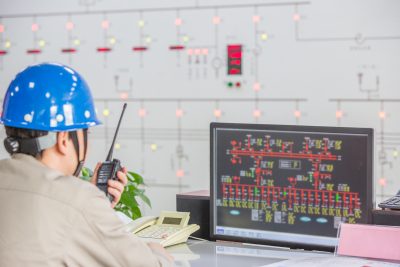
The scope of the project was wide as it has touched nearly all the key elements of operational management in the distribution network. Some of the most important activities were:
- Handling faults in medium- and low-voltage networks, with rapid-response units trained to isolate and resolve issues quickly so customer impact was minimized.
- Immediate, medium-term, and major equipment repairs, including transformers, power switches, and core cabling, to prevent faults from cascading further.
- Planned preventive maintenance (PM) with regular inspections, periodic testing, and specialist servicing designed to extend equipment lifespans and reduce surprise failures.
- Upgrading and maintaining urban street lighting systems, which may seem peripheral but plays a big role in public safety and community satisfaction.
- Identifying and addressing illegal or unregistered connections, using both on-the-ground checks and digital tools to improve energy accounting.
The East Karaj Electricity project was not defined by the list of services alone but the cohesiveness of the way they were handled. The operations of each unit were not isolated and the coordination of the operations was provided within one framework. This minimized field-supervision disconnections, enhanced functional field-supervision synergy, and in the end, implied defects could be detected and repaired faster. The outcome: quantifiable gains in reliability, increased signs of resiliency and, most significantly, an increase in customer satisfaction.
👉 The East Karaj Electricity Project scope demonstrates how coordinated operations improve reliability and resilience.
3. Human Resources and Equipment In The East Karaj Electricity Project
The project brought together 113 highly trained staff including senior technicians and electricians, as well as professionally trained drivers to work in the field. Each and every staff member was subjected to rigorous training in HSE, technical procedures and operational protocols before being officially released. The goal was to form multi-skilled teams that would be able to adjust to a large variety of the operational challenges.
At the logistical level, the teams were supported by a modern fleet of 22 fully equipped vehicles. This involved light and heavy lift trucks, aerial platforms, and cranes that are applicable in a dense urban environment as well as the industrial areas. Using this mix, it was possible not only to make operations faster but safer.
This two-fold focus, trained person power and modernized equipment, became a source of success. It was not merely a matter of additional hands on deck, but it was a matter of right hands having the right tools at the right time.Skilled teams and advanced tools made the East Karaj Electricity Project a strong example of modernized management.

4. Financial Structure and Timeline
The Integrated Operation Project of East Karaj Power Distribution Management project initially began with a contract value of 62.38 billion IRR. As work progressed, however, both the client and technical teams realized that the scope needed expansion. The contract was therefore adjusted to 85.72 billion IRR, not as a mere budget increase but more as a strategic reinvestment—funds directed toward stronger infrastructure, advanced equipment, and broader coverage.
Time wise, the initial program of the project was planned to last one year, which ended in July 2019. But already its usefulness was manifested. The client has been satisfied resulting in extension and even increased scope in addition to the successes in operations. Finally, the project was completed in September 2020 and recorded other milestones, including the minimization of rework, optimization of maintenance processes, and the improvement of the overall quality of services.
It should be noted that the extensions were not motivated by delays and inefficiencies. Quite the opposite, they were representative of the trust of the customer and the practical benefits that recommended a more lasting involvement.The financial planning and timeline of the East Karaj Electricity Project underline its effectiveness and efficiency.
5. Key Results and Value Creation
The East Karaj Power Distribution Project produced several notable outcomes:
- Significant reduction in average outage duration (SAIDI).
- Improved network preparedness against unexpected events and crises.
- Higher compliance with safety and HSE standards, reducing on-the-job accidents.
- Sharp decline in rework and repeated corrections, saving time and resources.
- Greater accuracy in identifying and dealing with illegal connections, lowering non-technical losses.
- Overall operational effectiveness, achieved by retaining skilled personnel and deploying well-equipped fleets.
Each of these results not only improved day-to-day service delivery but also reinforced the broader case for integrated management in the power distribution sector.The results highlight the East Karaj Electricity Project as a case of value creation and operational success.
6. Conclusion on East Karaj Electricity Project
The East Karaj integrated operation project can fairly be described as one of the more successful cases of applying unified operational management in Iran’s power distribution industry. It demonstrated that with thoughtful restructuring, multiple goals can be met simultaneously: reducing hidden costs, cutting down on duplication, boosting workforce productivity, and improving both the stability and quality of services.
The project also indicated the more strategic direction of more sustainable, intelligent, and responsive distribution networks. Networks that can both respond to the existing demand but also to the advanced technologies, including automation, real-time monitoring, and smart grids. East Karaj cannot be considered in that regard a one-off local attempt. It can possibly be a national case study, flexible to other territories with their own individual circumstances.
The East Karaj Electricity Project clearly highlights the benefits of integrated operational managemen. Such models, should they be replicated in a considerate manner, would contribute towards the realization of a more reliable, more resilient, more cost-effective distribution system-bringing Iran a step closer to its sustainable development objectives and, eventually, to the increased social well being.
If you are interested in learning about similar initiatives in Iran’s power distribution sector, we recommend reading our case study on Construction of 63/20 kV Feeder Lines – Qods City 2 Substation. This project highlights our expertise in modernizing substations and improving grid reliability.👉 In conclusion, the East Karaj Electricity Project stands as a national model of integrated operational management.The East Karaj Electricity Project represents a major step forward in Iran’s power sector.
