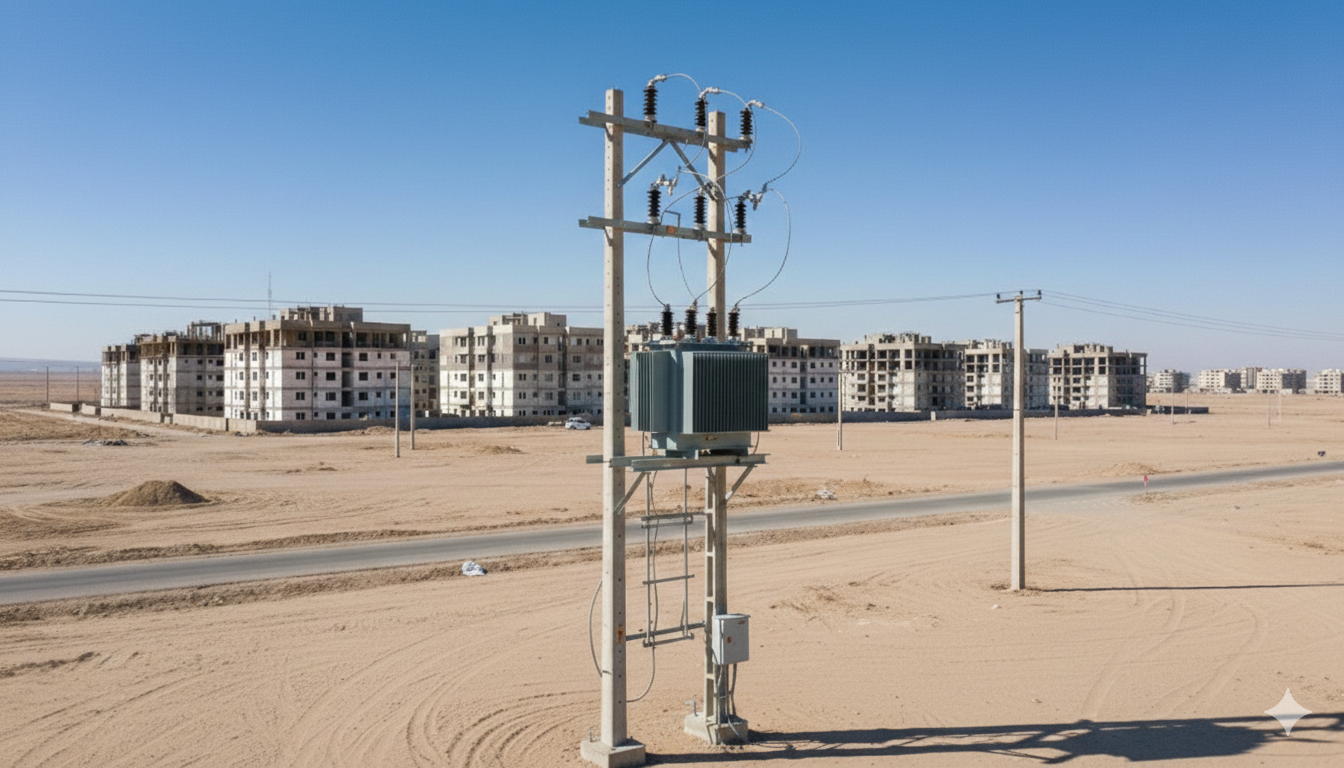
The Medium-Voltage Network Construction network and the provision of electricity for the 1,250-unit Cultural Cooperative residential complex in Malard was implemented under an EPC contract, commissioned by the Malard Cultural Cooperative Company, during the period from December 22, 2013 to September 22, 2014, with a contract value of 5,942,000,000 IRR. This project was executed by Pegah Energy Persian as one of the significant urban power infrastructure projects, with the objective of establishing a reliable, sustainable, and standards-compliant platform for supplying electrical energy to a large and high-density residential complex. The project played a key role in strengthening and developing the service infrastructure of the complex.
Given the rapid population growth in the Malard area, the increasing number of residential units, and the rising level of energy consumption, ensuring a stable and safe electricity supply had become a fundamental requirement for the operation of such residential developments. Temporary or non-standard networks were not capable of meeting the high demand load and could lead to unplanned outages, voltage drops, and increased safety risks. Accordingly, Pegah Energy Persian, relying on its technical expertise and extensive execution experience, adopted the design and implementation of a principled medium-voltage network in accordance with up-to-date technical standards and with future expandability as the primary solution.
In this project, all stages—from preliminary studies and engineering design to equipment procurement, network construction, and final commissioning—were carried out in an integrated and coherent manner within the EPC framework by Pegah Energy Persian. This approach enabled full coordination between the design and execution phases and allowed effective control over quality, scheduling, and project costs. The outcome of this process was the establishment of a safe, stable, and highly reliable power distribution network that not only fully meets the current needs of the residential complex but also has the capacity to accommodate future developments and increased load demand in the coming years.
1. Strategic Objectives and Necessity of Project Implementation
Considering the large scale of the residential complex and the high number of housing units, the provision of reliable and uninterrupted electricity as a critical infrastructure component played a decisive role in the quality of life of residents and the sustainable operation of the complex. Existing or temporary networks were unable to adequately support such demand levels and posed increased risks of power outages, voltage instability, and safety incidents. Therefore, the implementation of a standard medium-voltage network was not merely a technical requirement but a strategic necessity for the sustainable development of the complex.
Other key strategic objectives of the project included reducing energy losses, increasing network reliability, enhancing public safety, improving the urban landscape, and creating appropriate infrastructure to support future expansions. Together, these objectives formed the foundation for technical and executive decision-making throughout the project lifecycle and guided the adoption of solutions aimed at long-term performance and operational resilience.

2.scope of Services in Medium-Voltage Network Construction
The scope of services for the project was defined in a comprehensive and integrated manner, encompassing all engineering, construction, and equipment procurement activities. In the initial phase, detailed technical and engineering studies were conducted to analyze load requirements, select the optimal network configuration, and determine appropriate execution routes. These studies played a vital role in minimizing execution risks and maximizing network efficiency during the operation phase.
Subsequently, executive activities included the construction of approximately 2,200 meters of medium-voltage network, installation of poles, implementation of overhead lines, and the installation of 13 overhead substations. These substations were designed and strategically located to meet current load demands while also allowing for future capacity expansion. In addition, the implementation of internal street lighting networks within the complex was carried out to enhance traffic safety, improve residents’ comfort, and upgrade the quality of public spaces. The dismantling and reorganization of interfering overhead networks and the modification of existing lines were also part of the executive activities, contributing significantly to improved safety and order within the regional power distribution system.
3. Technical, Supervisory, and Executive Standards Requirements
All stages of the project were executed in full compliance with the technical regulations of Tavanir, the standards of the regional power distribution company, and relevant national regulations related to safety and operation. Equipment selection, substation design, and medium-voltage network implementation were carried out with a focus on increasing service life, reducing maintenance requirements, and enhancing overall system reliability.
Continuous supervision of project execution, quality control of incoming equipment, performance of technical tests before and after installation, and verification of conformity between executed works and approved drawings and technical specifications were among the most important project requirements. This supervisory approach significantly reduced the risk of execution errors and ensured the final quality and reliability of the implemented infrastructure.

4. Human Resources, Equipment, and HSE System
Project implementation was based on the utilization of specialized and experienced human resources. The project execution team consisted of electrical engineers, design experts, technical supervisors, execution technicians, and support personnel, each of whom played a defined role in advancing the project. Effective coordination among these teams was considered one of the key success factors of the project.
In parallel with human resources, an appropriate fleet of specialized machinery and equipment—including cranes, aerial lifts, substation installation equipment, testing instruments, and excavation machinery—was deployed. The Health, Safety, and Environment (HSE) management system was implemented in a systematic manner to protect personnel and prevent accidents and environmental damage. Safety training programs, use of personal protective equipment, and continuous monitoring of site conditions were among the primary measures undertaken in this area.

5. Financial Resources and Project Execution Structure
Project financial resources were provided within the framework of the contract concluded with the employer, and cost control was carried out based on physical progress and the approved schedule. The project execution structure was designed to ensure centralized and coordinated decision-making.
Overall project management was responsible for planning, progress control, and continuous communication with the employer. Technical management and field supervision focused on execution quality and compliance with standards, while the executive unit was responsible for on-site operations. Continuous interaction and coordination with utility service providers and local authorities played an important role in facilitating the execution process and preventing operational disruptions.

6. Executive Challenges and Mitigation Measures
Like many large-scale urban infrastructure projects, this project faced a range of technical, managerial, logistical, and scheduling challenges, the effective management of which was critical to overall project success. Spatial constraints within the execution area, interference with existing underground and overhead utilities, and the need to maintain safety in the surrounding environment were among the most significant technical challenges. If not properly managed, these issues could have resulted in work stoppages, increased costs, and reduced execution quality.
To address these challenges, execution routes were reviewed and optimized, continuous coordination was established with utility service organizations and relevant authorities, and flexible execution methods were adopted. Phased planning and alignment of execution processes with actual site conditions enabled work to continue without disrupting other infrastructure systems.
From a managerial and logistical perspective, timely procurement of equipment, effective workforce management, and strict schedule control were of paramount importance. Through dynamic planning, proactive risk forecasting, enhanced coordination among design, procurement, and execution teams, and continuous monitoring of project progress, the majority of scheduling and execution challenges were effectively managed. This integrated approach ensured that the project progressed within the planned timeframe while maintaining high technical quality and avoiding unnecessary delays.

7. Results, Achievements, and Added Value
Upon completion, the project was successfully commissioned and provided a stable and reliable infrastructure for supplying electricity to the residential complex. Increased network reliability, reduced energy losses, enhanced safety, and improved service quality were among the most important technical achievements of the project. From a managerial perspective, the successful implementation of the EPC model demonstrated strong capabilities in the simultaneous management of design, procurement, and construction, while creating significant added value for the employer.
To view other executive records and key projects of Pegah Energy Parsian Company in the field of power supply infrastructure, please refer to the projects page.
8. Conclusion
The construction of the medium-voltage network and power supply project for the 1,250-unit Cultural Cooperative residential complex in Malard represents a prominent and successful example of urban power infrastructure development based on an integrated, standards-driven, and forward-looking approach, executed by Pegah Energy Persian. Relying on its technical capabilities, execution experience, and coherent management system, the company successfully delivered all phases of design, equipment procurement, and construction within a coordinated and goal-oriented framework.
By strictly adhering to technical requirements, safety principles, and quality standards, Pegah Energy Persian established a stable, safe, and reliable power supply network for this large residential complex—one that not only fully meets current demands but also provides the necessary capacity for future development and increased load requirements. The achievements of this project have contributed significantly to the enhancement of urban power distribution infrastructure in the region, improved service quality, and increased end-user satisfaction, further reinforcing the position of Pegah Energy Persian as a capable EPC contractor in the energy and infrastructure sector.