Relocation of medium-voltage network interfering with the construction of the Kachooei underpass bridge together with the construction of the street lighting network; a redefinition of the interaction of human, technology, and the city for creating an infrastructure that is safe, beautiful, and sustainable.
The project of relocating the overhead and underground medium-voltage network interfering with the construction of the Kachooei underpass bridge, together with the construction of the street lighting network, was defined and implemented as one of the key plans in line with the renovation, safety enhancement, and upgrading of Karaj’s urban electrical infrastructure.
This project, with the aim of eliminating electrical conflicts along the bridge construction route and improving the lighting quality of the surrounding streets, is considered an effective step on the path of sustainable urban development and the improvement of public service quality. The implementation of this plan, with a contract amount of 4,100,000,000 rials and with Molavi Road and Building Company as the employer representing Karaj Municipality, in the time period from April 6, 2023, to August 22, 2023, was carried out by Pegah Energy Persian Company.
In this project, a set of specialized activities, including the design and construction of the underground medium-voltage network, the removal of interfering overhead networks, and the implementation of the street lighting system by employing modern technologies and standard equipment, was undertaken.
Considering the strategic location of the implementation site and the high volume of traffic infrastructure, this project is recognized as a model of integrated management of infrastructure projects in high-density urban environments. Pegah Energy Persian Company, by utilizing specialized personnel, advanced equipment, and a rigorous system of quality control (QA/QC) and safety (HSE), was able to complete all stages of design, implementation, and performance testing within the specified time frame and at a desirable level of quality.
In the following, the technical and managerial details of the project—including the overarching objectives, scope of services, execution structure, challenges and operational solutions, and ultimately the results and achievements obtained from the plan’s implementation—are addressed in detail so that a comprehensive picture of the process of implementing this project and its role in the development of urban infrastructure is presented.
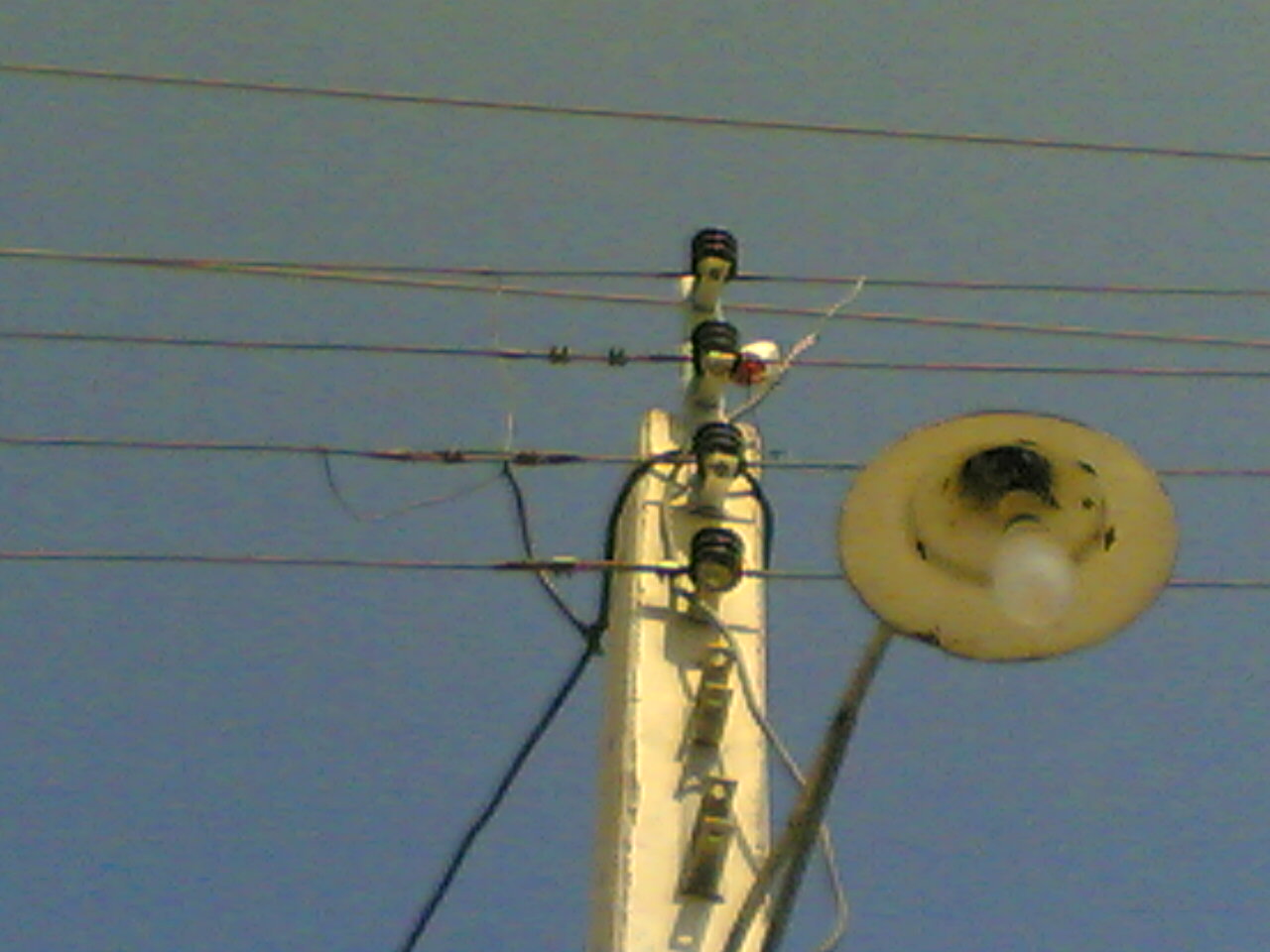
1. Macro objectives and the necessity of implementing the project Relocation of medium-voltage network
The main objective of implementing this project was to eliminate the conflicts of the medium- and low-voltage electrical networks within the area of the Kachooei underpass bridge construction and to create an infrastructure that is safe, durable, and compliant with modern standards of design and operation of urban power distribution networks. This plan is counted as a part of the overall strategy of renovating and optimizing vital urban infrastructure in the city of Karaj, which was designed and implemented with the aim of increasing network reliability, reducing energy losses, and improving the urban landscape.
Implementing this project was an effective response to the challenges arising from the interference of electrical networks with large-scale civil projects such as the construction of urban bridges.
The existing networks, as one of the main technical and safety obstacles of the civil project of the Kachooei underpass bridge, required principled and scientific relocation so that, while removing the conflict, the continuity and stability of the electrical supply to the area’s subscribers would be preserved.
Also, implementation of this plan was raised in line with accelerating the construction operations of the underpass, reducing unplanned outages, and improving electrical energy efficiency in the dense urban fabric of Karaj. In the new design, by replacing old overhead networks with underground medium-voltage lines, the risks arising from physical damage, weather conditions, and unauthorized contact were reduced to the minimum possible. In addition to technical considerations, this project also had strategic importance from the perspective of urban development
By implementing the relocation and improvement of the electrical networks, the ground was prepared for increasing traffic safety, improving the quality of street lighting, and enhancing the urban image and landscape in the main axes of the Kachooei bridge area. Thus, this action, not only as a technical power-supply project, but as an effective step in realizing sustainable urban development and improving citizens’ quality of life, is recognized.
In general, the final objective of the project can be summarized in three key axes:
- Ensuring safety and stability of the urban distribution network through eliminating conflicts and implementing standard underground feeders;
- Synergy with large urban civil projects in order to prevent functional interference and delays in execution operations;
- Enhancement of visual aesthetics, reduction of visual pollution, and improvement of urban service quality through replacing overhead infrastructure with modern underground systems.
2. Scope of services and operational activities
The scope of this project encompassed a set of specialized activities in the fields of design, implementation, safety, and optimization of urban power distribution networks, which were carried out with the aim of eliminating electrical conflicts and recreating the technical structure of the network in the Kachooei underpass implementation area. The execution operations were designed and implemented in three separate phases, but in a chain-like and continuous manner, so that, while maintaining continuity of power supply, the simultaneous progress of the bridge’s civil operations would be possible.
2.1. Phase One: Design and construction of the underground medium-voltage network
In this stage, detailed engineering studies and route designs for the underground feeders were carried out using geotechnical data and GIS surveying. The objective of this phase was to create two underground medium-voltage feeders with an approximate length of 8,300 meters so as to replace old overhead lines that conflicted with the bridge plan.
The implementation of this phase included the following items:
- Selecting the optimal route based on soil conditions, density of existing infrastructure, and traffic limitations;
- Trench excavation with standard depth and width in accordance with Tavanir Company regulations;
- Installing protective conduits (duct bank) and routing medium-voltage cables while observing safety spacing;
- Installing joints, terminations, and protective equipment at branching points;
- Testing and commissioning the new lines step by step and under the supervision of the network operations unit.
The result of this phase was the formation of an infrastructure that is stable and resistant to environmental and mechanical damage, which enabled safe and stable supply to the area’s subscribers without dependence on overhead lines.
2.2. Phase Two: Dismantling and removal of interfering overhead networks
The second stage was the work of decommissioning and eliminating some 4,500 meters of old overhead medium- and low voltage networks to clear the entire bridge construction path and minimize safety risks. At this phase, the implementation team based on HSE principles and after the transfer of loads to the new underground lines, continued with the dismantling of cables, poles, transformers, and overhead accessories.
This process, with high precision and in continuous interaction with the Karaj Power Distribution operation units, was performed so that no interruption would occur in supplying energy to consumers.
In addition to clearing the bridge route, planned removal of overhead networks led to improving traffic safety, reducing visual pollution, and enhancing the urban landscape within the project’s area.
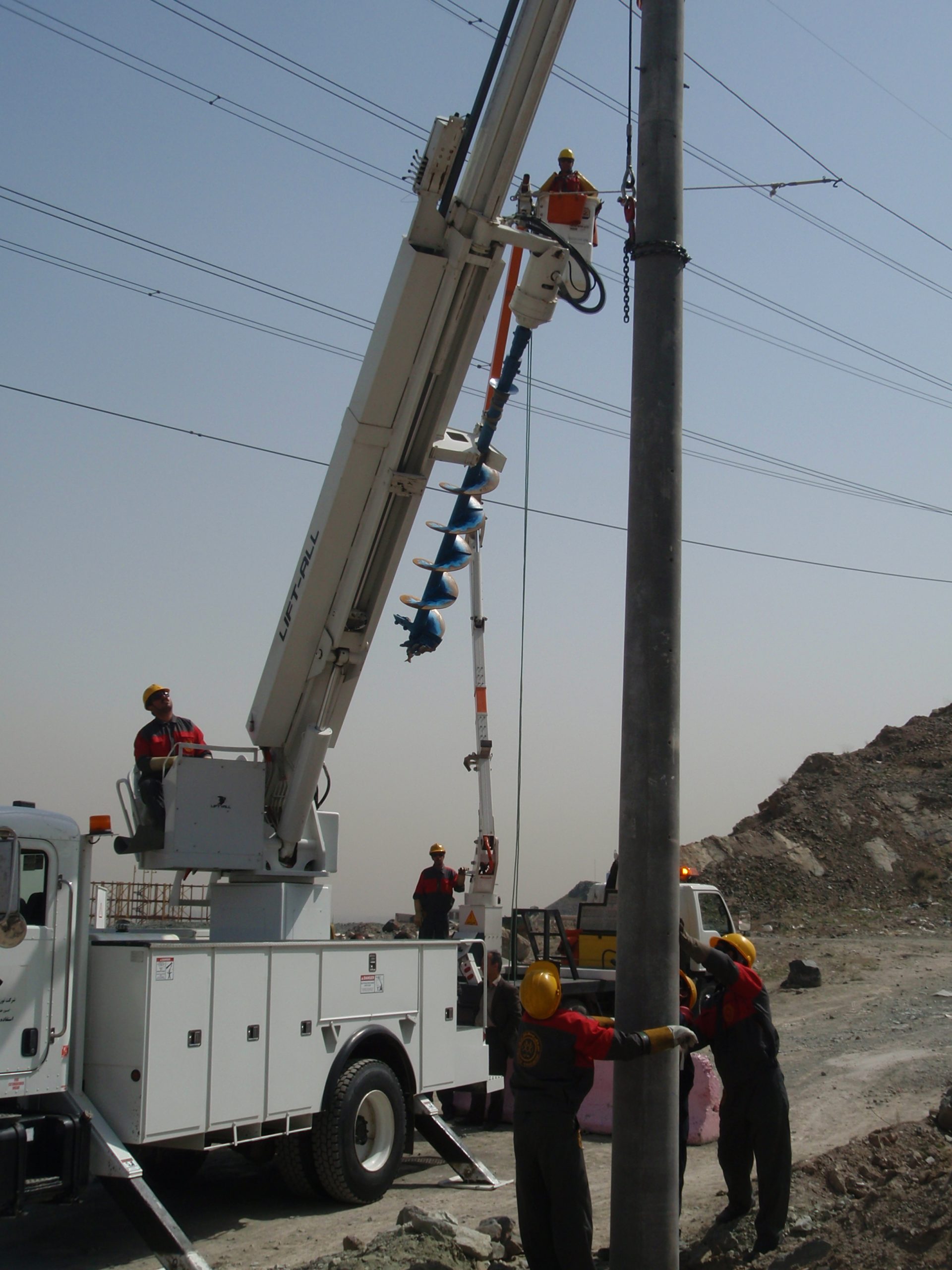
2.3. Phase Three: Construction of the street lighting network
In the third phase, in order to enhance traffic safety and improve public lighting in the underpass area and surrounding streets, the construction of 750 meters of street lighting network was carried out using steel poles and standard equipment.
In this stage, lighting studies and illumination intensity calculations were performed based on IES standards and Tavanir regulations, and the lighting system with an optimized design was installed. The key activities of this phase were as follows:
- Accurate positioning of lighting poles based on light distribution radius and minimum overlap;
- Underground cabling from lighting distribution panels to the poles;
- Installation of energy-efficient LED luminaires with IP66 protection rating;
- Testing of the lighting system and automatic control through timers and photo-sensors.
The result of implementing this phase was increased safety of nighttime traffic, improved drivers’ visibility, and reduced potential accidents in the underpass area and surrounding routes.
2.4. Technical and supervisory requirements
All stages of design and implementation were in accordance with the technical regulations of the Power Distribution Company, IEC standards, and HSE safety guidelines. High-level and site supervision was carried out by on-site project experts and in full coordination with the main contractor, Molavi Road and Building Company. Also, technical documents including As-built drawings, insulation test reports, and final operation manuals were delivered to the employer so that the ground for sustainable operation of the new facilities would be provided.
3. Human resources and equipment fleet
The implementation of the project of relocating the interfering medium- and low-voltage networks of the Kachooei underpass was carried out by Pegah Energy Persian Company, relying on technical capability, execution experience, and utilizing specialized forces in the fields of electricity and civil. The project’s execution structure was designed and implemented based on project management principles (PMBOK) and with an approach of continuous quality control and observance of HSE requirements.
3.1. Specialized team and human resources
The project was implemented with the participation and organization of a multidisciplinary team consisting of qualified and experienced personnel in various fields. This team included the following items:
- Electrical design and supervision engineers: responsible for designing the routes of underground feeders, calculating voltage drop, selecting optimal cable sizes, and supervising precise execution in accordance with Tavanir and IEC standards.
- Quality control and safety (HSE) experts: responsible for field monitoring, preparing safety checklists, and supervising compliance with protective instructions in all stages of excavation, cabling, and equipment installation.
- Installation and operation technicians: the main executors of installing terminations, joints, power and lighting panels, and performing performance and insulation tests before final hand-over.
- Civil and excavation crews: responsible for earthworks, trenching, route leveling, street restoration, and preparing the bed suitable for installing cables and lighting poles.
- Project manager and field supervisors: leading, planning, and schedule control with the goal of ensuring the realization of technical and time objectives within the approved budget.
All members of the execution team operated under the direct supervision of the project control unit of Pegah Energy Persian and their performance was documented through daily coordination meetings and continuous reviews.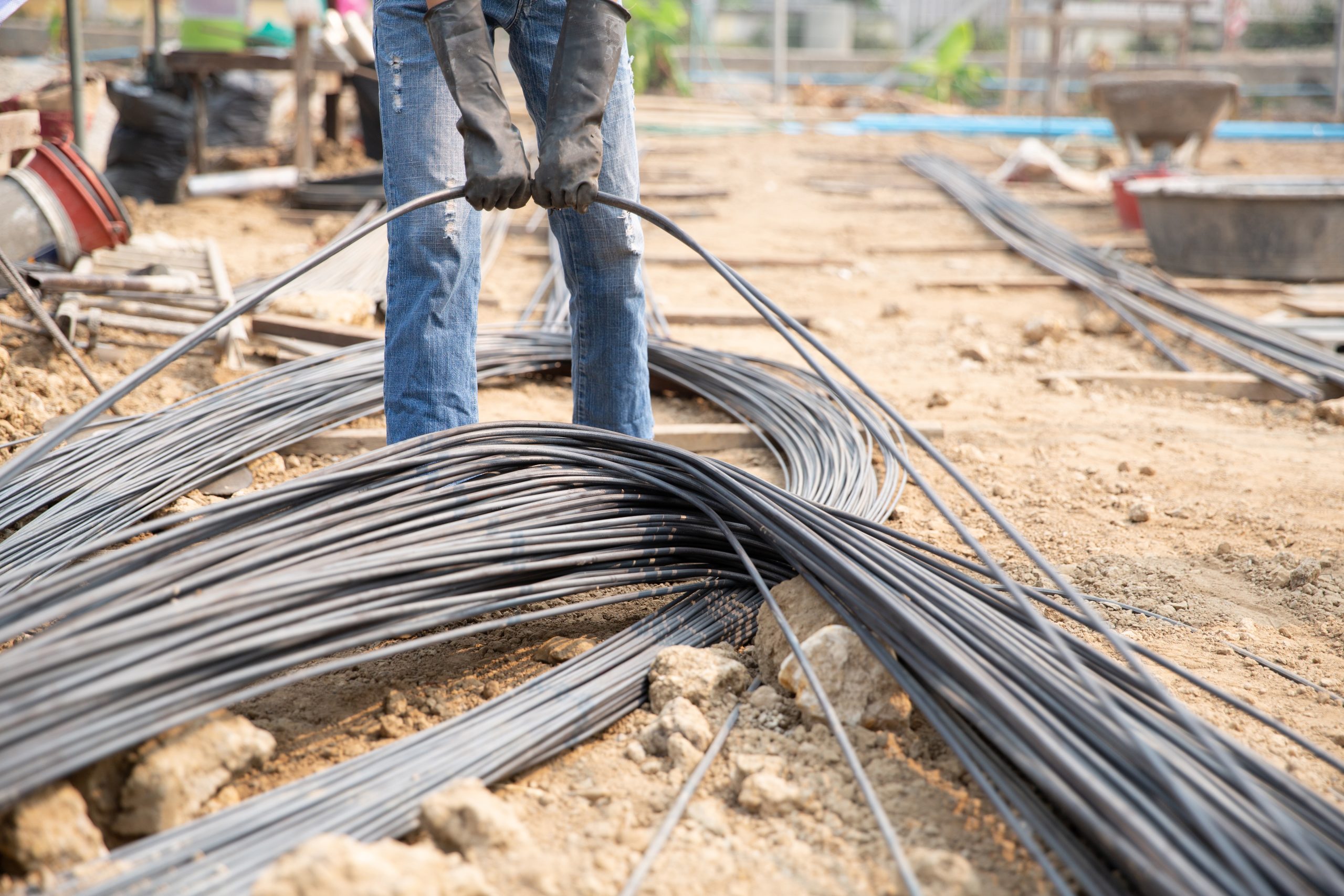
Implementation of underground feeders and standard cabling along the project route
3.2. Equipment fleet and execution machinery
In order to implement the operations precisely and safely, Pegah Energy Persian utilized a set of specialized machinery and modern execution equipment, which included the following:
- Mechanized excavation machines (Trencher & HDD): for controlled excavation and passing cables under high-traffic routes without creating traffic blockage.
- Cranes for pole and power-pole installation: for moving and installing steel lighting poles and heavy network equipment.
- Insulated boom lifts and electrical service vehicles: for installation, repair, and testing at height with full electrical safety.
- Hydraulic cable-pulling machines and drum pullers: for cable laying with control of mechanical tension and preventing damage to cable sheaths.
- Precision measuring and testing equipment (Megger, Earth Tester, Clamp Meter): for evaluating insulation resistance, ground testing, and final quality control of the network.
- Heavy civil machinery: including excavator, dump truck, and light roller for excavation, street restoration, and stabilizing the route bed.
All equipment used had valid technical health certificates, liability insurance, and valid calibration approvals, and their maintenance operations were performed in accordance with the company’s internal instructions.
3.3. Quality control and safety system (HSE Management System)
Pegah Energy Persian Company actively employed a comprehensive quality control and safety (HSE) system in this project. This system included assessment of execution risks, training of personnel, preparation of individual and environmental safety instructions, and continuous monitoring of processes. All excavation, cabling, and installation operations were performed in the presence of safety supervisors and using warning signs, safety tapes, and personal protective equipment (PPE).
The result of employing this system was execution without incident, with high quality, and in full compliance with technical and environmental requirements.
4. Financial resources and execution structure
In this section, the financial resources, the method of allocating credits, and the managerial and execution structure of the project are examined. In the following, the details related to the method of financing, organizing the execution teams, and the managerial system of the project of relocating the overhead and underground medium-voltage network interfering with the construction of the Kachooei underpass bridge together with the construction of the street lighting network are explained.
4.1. Financial resources
The project of relocating the medium- and low-voltage network interfering with the construction of the Kachooei underpass bridge was implemented with a budget of 4,100,000,000 rials and with Molavi Road and Building Company as employer representing Karaj Municipality.
The execution contract was awarded to Pegah Energy Persian Company, which, relying on its managerial, technical, and execution capability, assumed full responsibility for design, implementation, and supervision of the project’s electrical operations. The financial resource management of this project was carried out based on the Earned Value Management (EVM) model so as to ensure precise cost control, prevention of financial deviations, and increased resource efficiency. All payments, procurement of equipment, and allocation of human resources were made within the framework of the approved plan and in accordance with the project’s phased schedule.
4.2. Project execution structure
To realize the project’s technical and time objectives, a three-layer execution structure was designed and implemented within the project management system of Pegah Energy Persian. This structure included managerial, technical, and execution levels, each of which played a specific role in advancing the various stages of the project:
4.2.1. Overall project management
At this level, the senior management of Pegah Energy Persian was responsible for macro-planning, scheduling, allocation of financial and human resources, cost control, and high-level supervision over the project’s progress.
Overall management, using planning tools such as Microsoft Project and Primavera, monitored the project’s progress daily and presented periodic analytical reports to the employer.
For more similar projects, please visit the Projects page.
4.2.2. Technical management and field supervision
At the technical level, a group of electrical engineers, quality control, and safety personnel were responsible for route design, preparation of execution drawings (Shop Drawing), controlling compliance of operations with standards, and performing technical tests.
Field supervision was also carried out with the continuous presence of Pegah Energy Persian experts at the project site so as to ensure the quality of installation, cabling, jointing, and equipment performance.
4.2.3. Execution unit and field operations
At the lowest level of the structure, the execution unit and operational teams were responsible for direct implementation of activities including excavation, cable laying, installation of lighting poles, erection of panels, and final performance testing.
This unit, in full coordination with technical management and using a real-time reporting system, documented the status of each part’s implementation and resolved potential problems in the shortest possible time.
4.2.4. Inter-organizational and managerial coordination
In order to ensure integrated execution of the project, regular coordination meetings between the employer (Karaj Municipality), the main contractor (Molavi Road and Building Company), and the specialized electrical contractor (Pegah Energy Persian) were held weekly. In these meetings, issues related to scheduling, interference of civil and electrical operations, equipment supply, and safety requirements were reviewed, and execution decisions were made with a problem-solving approach. This coordination led to reduced delays, improved productivity, and full realization of the project objectives within the specified time frame.
5. Execution challenges and solutions
In the process of implementing the project of relocating the medium- and low-voltage network interfering with the construction of the Kachooei underpass bridge, Pegah Energy Persian faced a set of technical, managerial, logistical, and time-related challenges. These challenges, due to the complexity of the urban environment, multiplicity of stakeholders, limited space, and the necessity of simultaneous execution of civil and electrical operations, required quick decision-making and precise engineering solutions. In the following, the most important challenges and the solutions adopted are presented by category.
5.1. Technical and infrastructure challenges
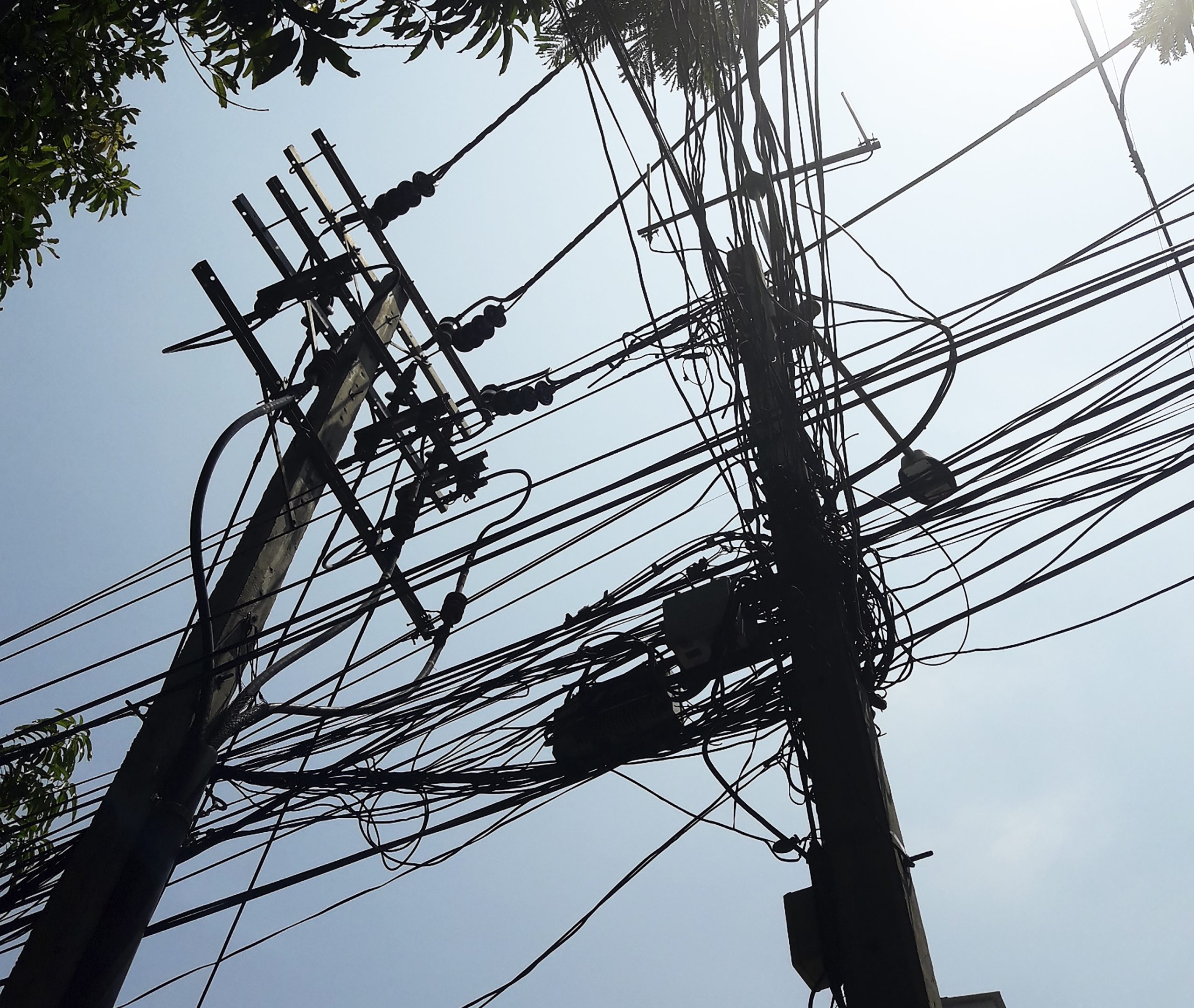
Among the most important technical challenges of the project were the high density of urban service networks in the soil depth — including gas, telecommunications, water, and sewage — along the underpass route, which made direct trenching and traditional cable laying high-risk. Also, space limitations in the underpass area and the necessity to reroute medium-voltage lines in order to maintain safety radius with other facilities created significant technical complexities.
Execution solution: Pegah Energy Persian, using precise GIS-based surveying, three-dimensional subsurface modeling, and targeted geotechnical studies, identified the exact position of buried facilities. In sections where open-cut excavation was not possible, trenchless technology, especially directional drilling, was used so that, while reducing damage to existing infrastructure, operations would be done with minimal surface destruction. This approach significantly reduced the project’s execution risk and led to technical stability of the constructed networks.
5.2. Managerial and human resources challenges
Given the multi-disciplinary nature of the project and simultaneous execution by various contractors (road, traffic, structure, and electricity), work overlap and lack of time coordination across different operational fronts were among the main project management challenges. This issue sometimes led to temporary stoppages in excavation or cable-laying progress.
Execution solution: Pegah Energy Persian, by establishing a Project Management Office (PMO) at the site and holding regular inter-agency coordination meetings with the presence of representatives of the employer and related contractors, succeeded in creating managerial integration. By employing scheduling tools such as MS Project and a real-time reporting system, overlaps of activities were identified and corrected. The result of this action was increased labor productivity, reduced rework, and improved execution quality.
5-3- Logistical and equipment supply challenges
One of the challenges affecting the project’s execution progress was delay in supplying some critical equipment, including medium-voltage cables, terminations, joints, and steel lighting poles, which was due to market fluctuations and limitations of the domestic supply chain.
Execution solution: To prevent stoppage of operations, Pegah Energy Persian entered into direct contracts with domestic manufacturers and certified suppliers. Also, critical items were stored as a pre-stock of the project so that, in case of delays in delivery of other equipment, the execution progress would not be interrupted. In addition, by creating an inventory tracking system and controlling inbound and outbound materials, the time of equipment supply was optimized.
5.4. Time-related challenges and execution requirements
Considering the limited time frame of the project —From April 6, 2023, to August 22, 2023 — observance of precise scheduling and preventing delays in each of the three phases was of particular importance. Simultaneity of power-supply operations with civil execution of the bridge and traffic limitations on the main corridor had turned time management into one of the most sensitive components of the project.
Execution solution: Pegah Energy Persian, by adopting the fast-tracking time management approach and dividing work fronts in parallel, prevented delays. Implementing dual work shifts (day and night) in critical points and using experienced and multi-skilled personnel led to completion of all stages of design, excavation, cable-laying, and performance testing within the approved period. Also, continuous control of physical progress and comparing it with the baseline schedule provided the possibility of quickly correcting the project’s path.
6. Results and strategic achievements
The project of relocating the medium- and low-voltage networks interfering with the construction of the Kachooei underpass bridge, managed and executed by Pegah Energy Persian, is recognized as one of the successful examples of synergy between electrical engineering and urban civil engineering. The results obtained from this project, not only are noteworthy from technical and execution perspectives, but also have high strategic value from managerial and urban development aspects. In the following, the most important achievements of the project are presented by category:

6.1. Technical achievements
Implementing this project led to realization of a set of key technical achievements that play a direct role in improving the performance and stability of the urban distribution network:
- Successful implementation of more than 8,300 meters of underground medium-voltage network in full compliance with Tavanir and IEC technical standards, including route design, cable laying, jointing, performance testing, and final hand-over;
- Noticeable reduction of electrical losses in the distribution network through replacement of old overhead lines with standard underground cables with lower resistance and higher mechanical protection;
- Increased stability and reliability of the area’s electrical supply by reducing the network’s vulnerability to wind, precipitation, physical contact, and environmental factors;
- Improved public and environmental safety by removing overhead lines, reducing the probability of electric shock, eliminating risks due to pole falls, and increasing safety in high-traffic streets;
- Upgrading the quality of urban lighting by using standard LED luminaires and steel poles resistant to corrosion and vibration.
6.2. Managerial and operational achievements
In the managerial dimension, the project is an example of effective management of time, quality, and human resources, which was implemented in an integrated manner relying on Pegah Energy Persian’s management system. The achievements in this field include the following:
- Optimization of scheduling and quality control processes using project management software and a precise system of documenting physical progress;
- Enhancing coordination among executive bodies (Karaj Municipality, Power Distribution Company, the main contractor, and the specialized electrical contractor) through regular coordination meetings and analytical reports;
- Reducing long-term maintenance and repair costs by replacing worn-out facilities and designing an underground system with higher operational lifespan;
- Increasing productivity of human resources and equipment through continuous training, performance monitoring, and optimal allocation of resources across work fronts;
- Achieving full client satisfaction by delivering the project on schedule, without incidents, and with high execution quality.
6.3. Strategic achievements
From the perspective of urban development and infrastructure policy-making, the results of this project went beyond execution boundaries and left long-term positive effects on the urban environment and public services of the area.
- Enhancing the level of infrastructure services and the stability of the power network within Karaj’s urban area, especially in the critical and high-traffic corridors of the Kachooei underpass;
- Improving the urban image and public landscape by removing overhead power poles and organizing street visuals;
- Creating a resilient and durable infrastructure for future civil developments, including traffic, commercial, and service projects;
- Increasing citizens’ satisfaction and gaining public trust toward the performance of the municipality and infrastructure contractors;
- Creating a successful model of inter-sectoral cooperation among urban bodies, power distribution companies, and specialized contractors in implementing similar infrastructure projects.
7. Conclusion
The project of relocating the overhead and underground medium-voltage network interfering with the construction of the Kachooei underpass bridge is a successful example of integrated urban infrastructure management that was executed by Pegah Energy Persian relying on technical knowledge, execution experience, and a systematic approach. The objective of this plan was to eliminate conflicts of power-supply networks, increase safety, enhance the stability of electrical supply, and improve the urban image in one of the most high-traffic points of Karaj.
Observance of technical standards, utilization of modern drilling and cable-laying technologies, and establishment of QA/QC and HSE systems led to completion of the project within the scheduled time and with desirable quality. Implementation of more than 8,300 meters of underground network, safe removal of interfering overhead networks, and construction of a standard lighting network were the prominent achievements of this project, which resulted in improved performance and beautification of the urban environment.
This plan is an effective step on the path of modernizing urban service networks and can be used as a successful model for similar projects in the country. The coordinated cooperation among the employer (Karaj Municipality), the main contractor (Molavi Road and Building Company), and the specialized electrical contractor (Pegah Energy Persian) showed that scientific management and cross-sector synergy can make the implementation of infrastructure projects possible with maximum efficiency and minimum interference.
